Amid the dynamic momentum of digital transformation, deep international integration, and national institutional reform, the activities held at Ho Chi Minh City University of Law in mid-January 2026 present a multidimensional yet coherent development landscape: cultivating globally oriented legal professionals, building an innovation ecosystem, contributing academic insights to judicial reform, and disseminating the values of national service through generations of intellectuals nurtured by the University.
The series of events throughout the week not only reflect routine academic engagements but also embody a consistent strategic trajectory—from knowledge to innovation, from institutions to people—forming a cyclical continuum of knowledge production and social responsibility that ULAW steadfastly pursues.
Training Bachelor of Arts in Chinese Language: from communication bridge to risk management partner
On 19 January 2026, Ho Chi Minh City University of Law convened a scientific seminar entitled “Training Bachelor of Arts in Chinese Language at Ho Chi Minh City University of Law: Human Resource Demand – Training Model – Development Solutions”, gathering University leaders, lecturers, educational experts, and legal practitioners from Viet Nam and abroad.
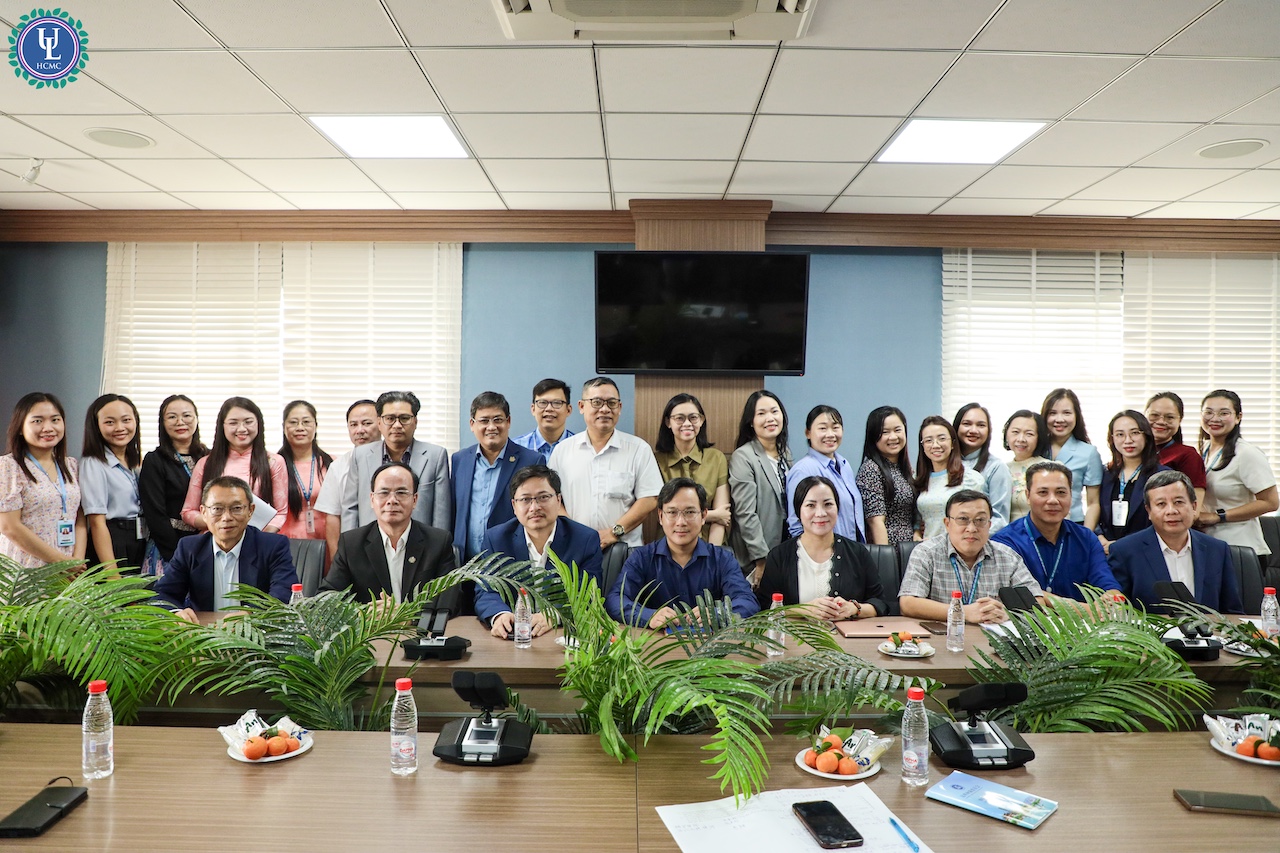
The seminar attracted the participation of numerous experts and scholars from both within and outside the University
At the seminar, Associate Professor, Dr. Vũ Văn Nhiêm, Party Secretary of Ho Chi Minh City University of Law underscored the strategic role of the Chinese language in comparative legal research and international integration, while identifying a significant shift in contemporary labor market demands: enterprises and legal service providers increasingly seek professionals with legal reasoning capabilities who can participate in contract review, evidence development, legal advisory services, and decision-making support, rather than merely performing translation and interpretation tasks.
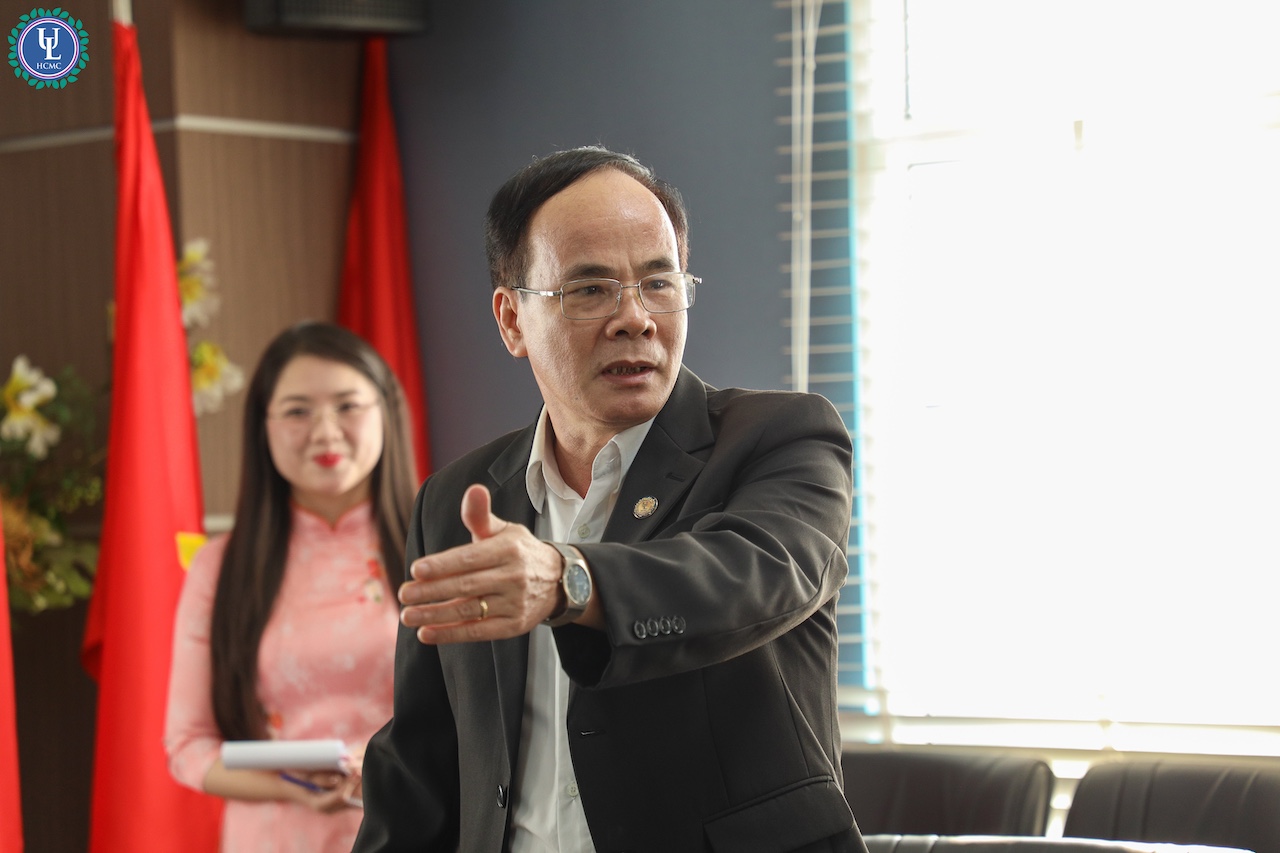
Associate Professor, Dr. Vũ Văn Nhiêm, Party Secretary of Ho Chi Minh City University of Law, delivered remarks at the seminar
From a practitioner’s perspective, Lawyer Tian Jian (Allbrightlaw Law Firm, China) affirmed a fundamental transformation in the role of language professionals—from “interpreters” to “risk management partners” in cross-border transactions.
%20copy.JPG)
Lawyer Tian Jian from Allbright Law Firm (China) spoke at the seminar
Academic discussions converged on the view that Chinese is not merely a communication tool, but a gateway to legal, economic, and institutional knowledge across the region, as well as an essential competency for engaging in research, negotiation, and legal risk governance in transnational contexts.
Accordingly, an interdisciplinary training model was proposed, integrating advanced linguistic knowledge with legal studies, contract law, and commercial economics. The objective is to cultivate graduates capable of engaging directly in professional practice, thereby narrowing the gap between academic training and professional requirements.
Challenges relating to interdisciplinary faculty development, bilingual legal terminology standardization, and case-based teaching methodologies were also identified, accompanied by solutions including a two-phase training pathway, enhanced international cooperation, and the application of artificial intelligence technologies in teaching and research.
The seminar reaffirmed the University’s strategic orientation in developing high-quality legal-linguistic human resources to meet the demands of an integrated economy and the growing influx of international investment.
Interdisciplinary cooperation to foster entrepreneurship and innovation
In alignment with the strategic orientation of linking education with the socio-economic development ecosystem, on 20 January 2026, Ho Chi Minh City University of Law and Fulbright University Vietnam signed a comprehensive Memorandum of Understanding on cooperation in supporting entrepreneurship and innovation.
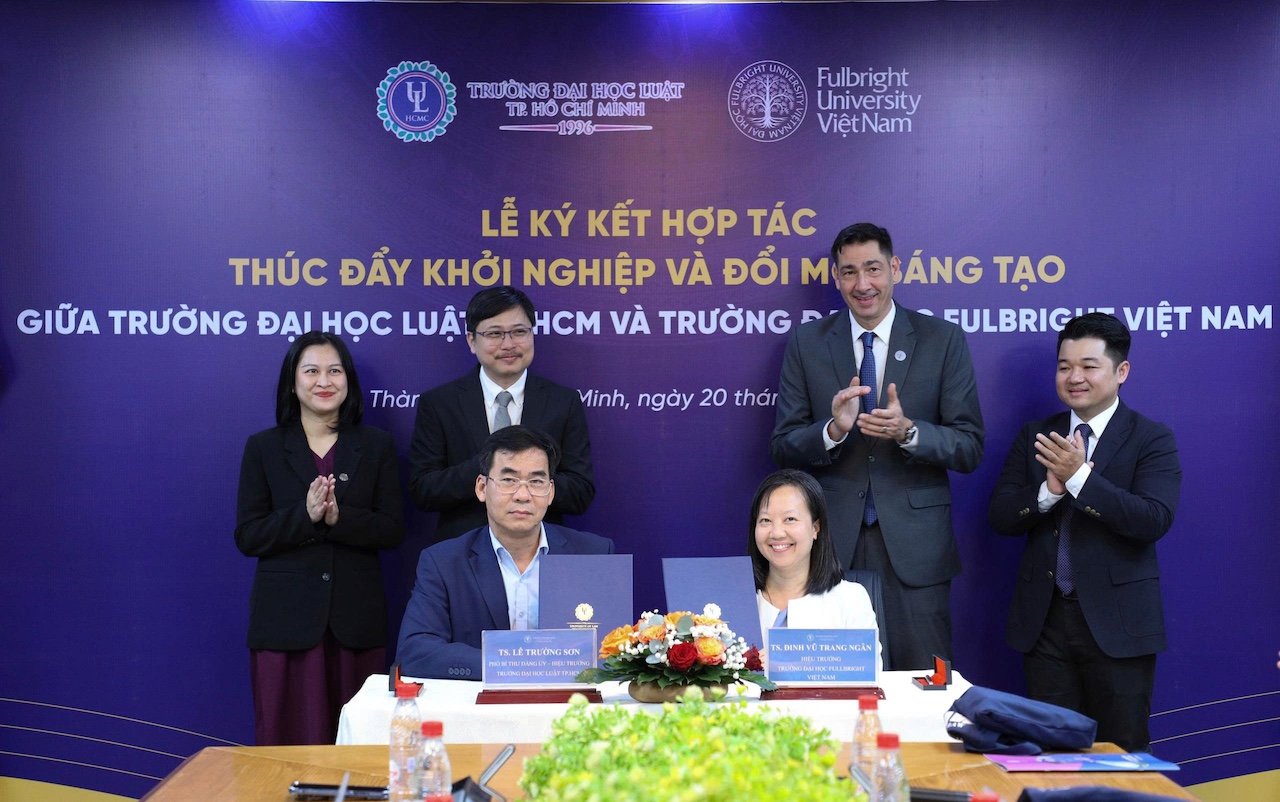
The Rectors of both universities signed the Memorandum of Understanding on cooperation
At the event, Dr. Lê Trường Sơn, Rector of Ho Chi Minh City University of Law emphasized that entrepreneurship and innovation require an ecosystem integrating legal knowledge, governance, technology, and artificial intelligence, in which law functions not only as a protective framework but also as a catalyst for creativity and sustainable development. Accordingly, the cooperation program aims to connect legal, managerial, technological, and AI knowledge, establish an ecosystem supporting startup projects from ideation to implementation, and transform academic knowledge into social impact.
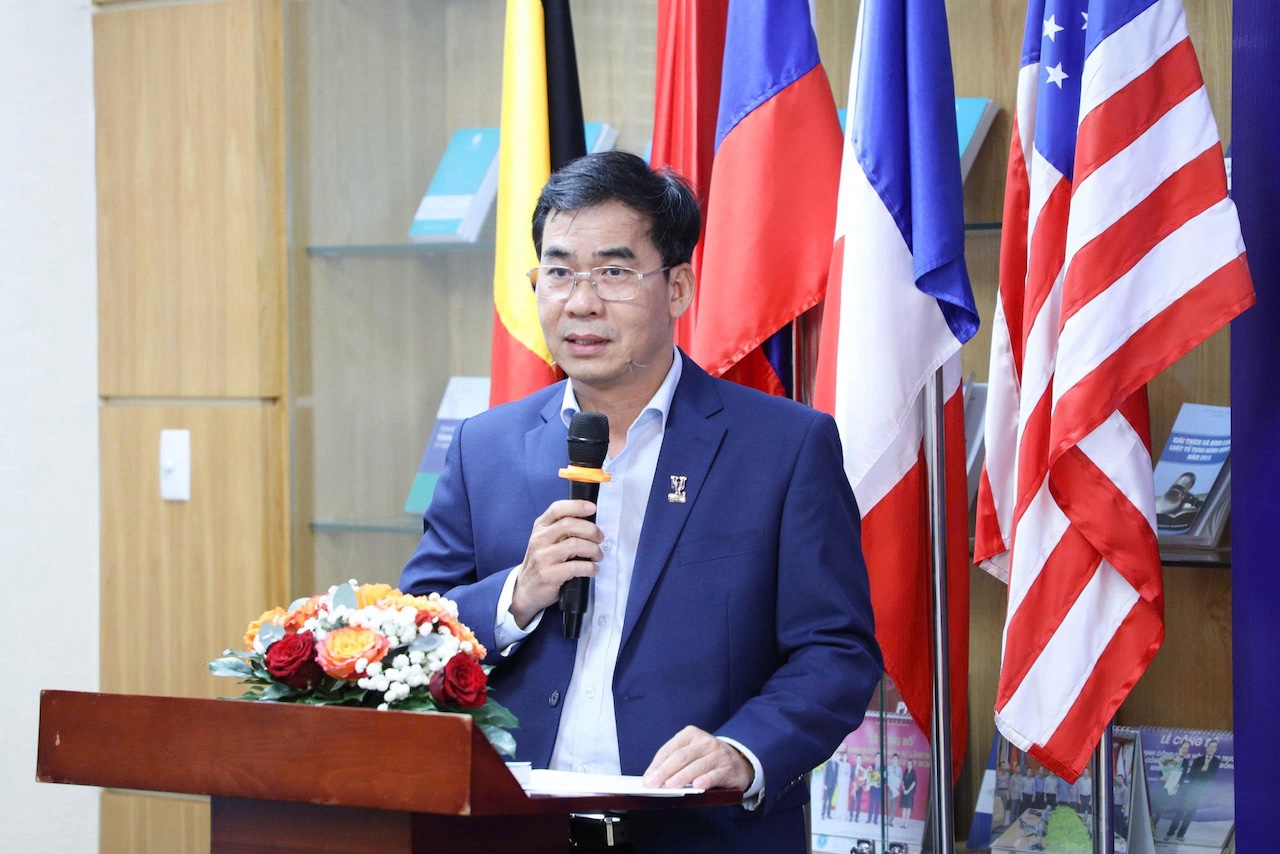
Dr. Lê Trường Sơn, Rector of Ho Chi Minh City University of Law delivered remarks at the event
The two universities agreed to implement key cooperation areas, including the establishment of multidisciplinary mentor networks; training, research, and community support programs for entrepreneurship; incubation initiatives; inter-university academic activities; policy research and legal data development in the context of digital transformation; and intellectual property support and business–investment fund connectivity.
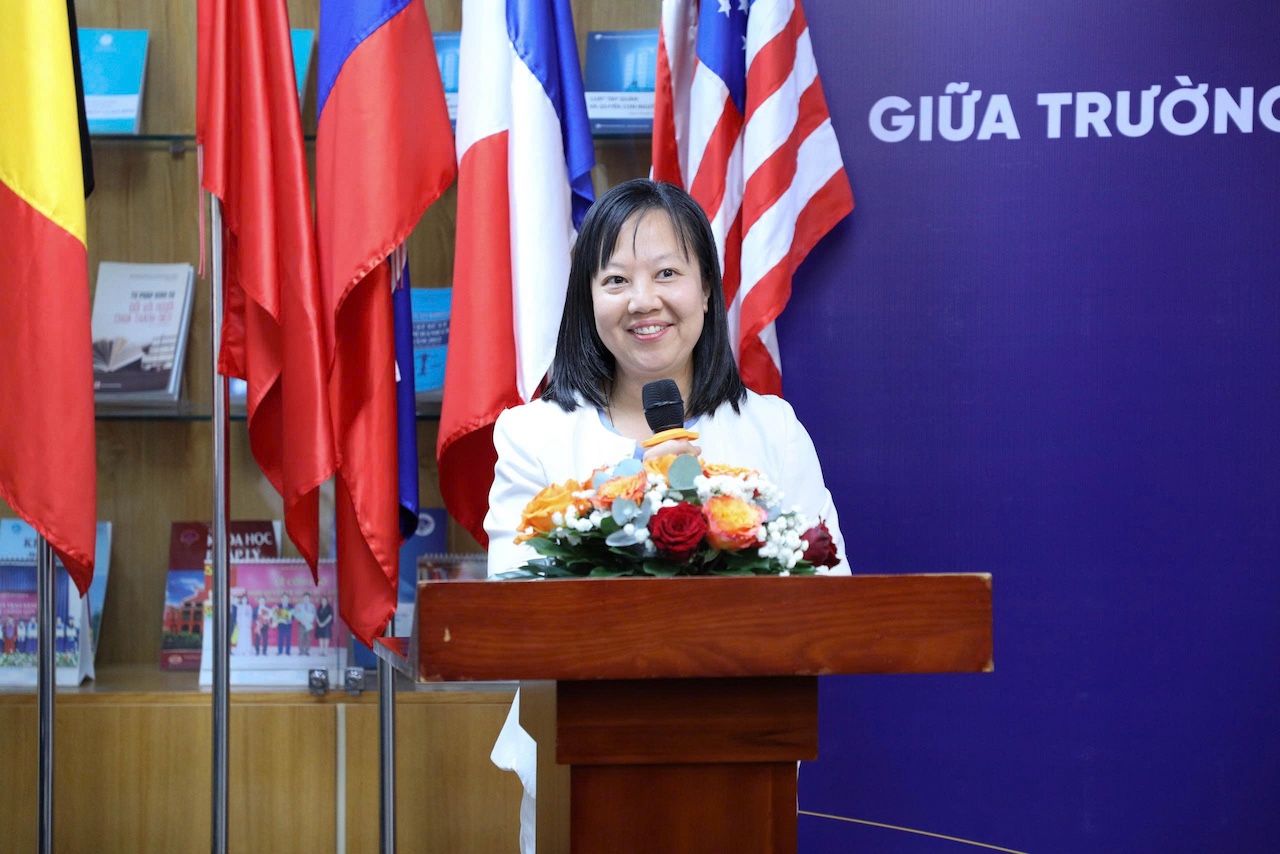
Dr. Đinh Vũ Trang Ngân, Rector of Fulbright University Vietnam, delivered remarks at the event
The five-year agreement lays the groundwork for translating academic knowledge into social impact while expanding experiential learning opportunities for students in law, technology, and innovation.
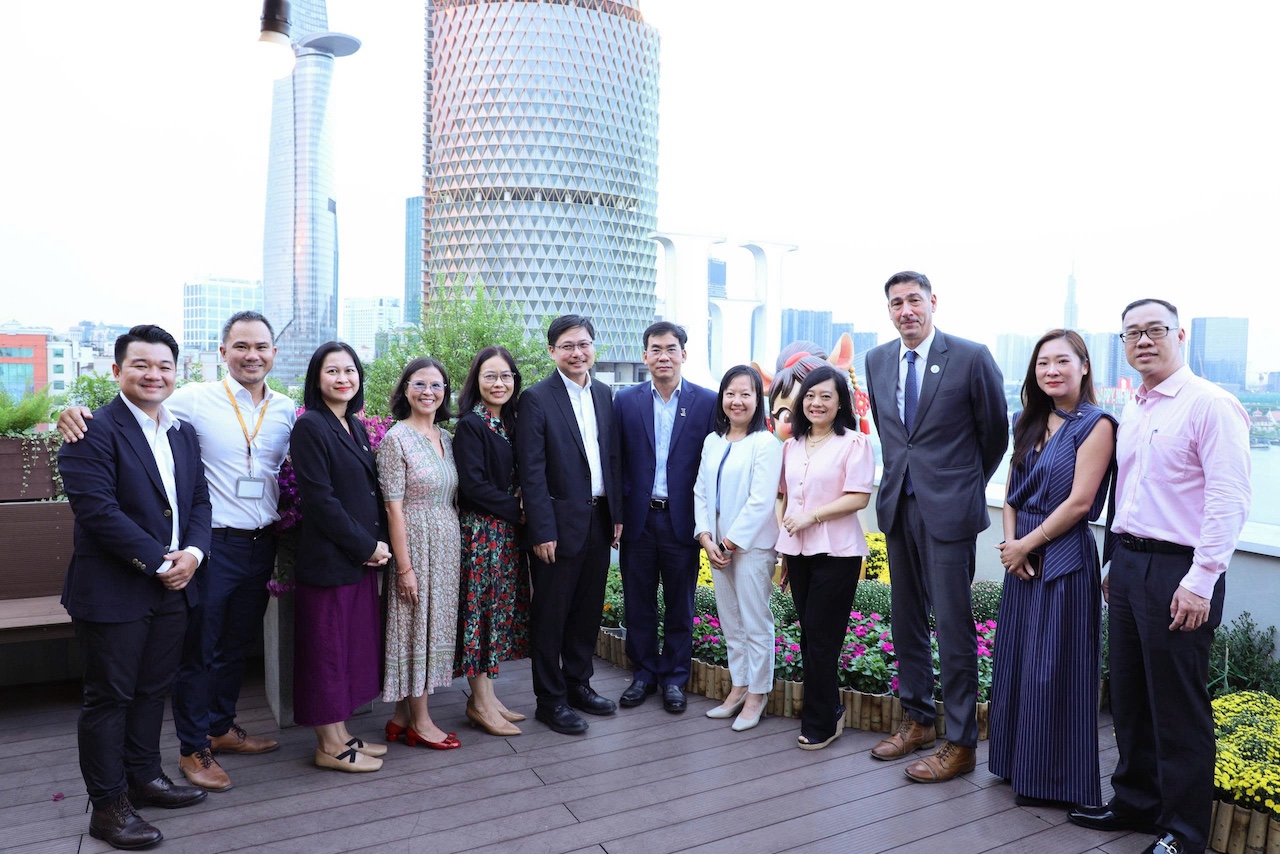
Delegates posed for a commemorative group photo at ULAW Top View Educafe
Academic contributions to judicial reform and institutional development
On 23 January 2026, Ho Chi Minh City University of Law, in collaboration with Regional People’s Court No. 7, Ho Chi Minh City organized a national scientific conference entitled “Institutional Development and Enhancing the Effectiveness of Civil Case Resolution at Regional People’s Courts”, attracting approximately 200 participants, including court leaders, legal experts, judges, and law lecturers.
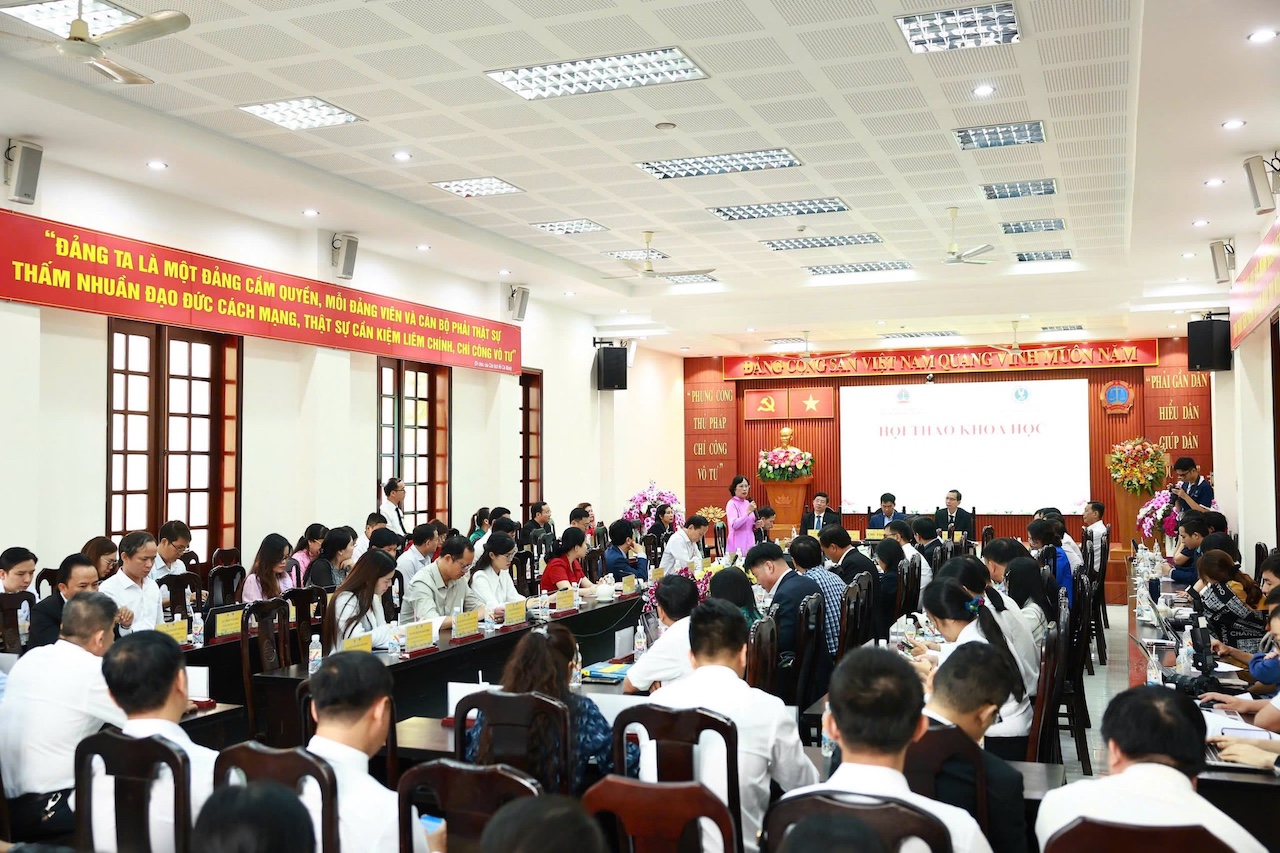
An overview of the conference at the headquarters of the Regional People’s Court No. 7, Ho Chi Minh City
The conference took place in the context of the establishment of the regional People’s Court model under the 2025 amended legislation, which has created an urgent need for institutional refinement and enhanced adjudicative effectiveness in the process of building a socialist rule-of-law state in Viet Nam.
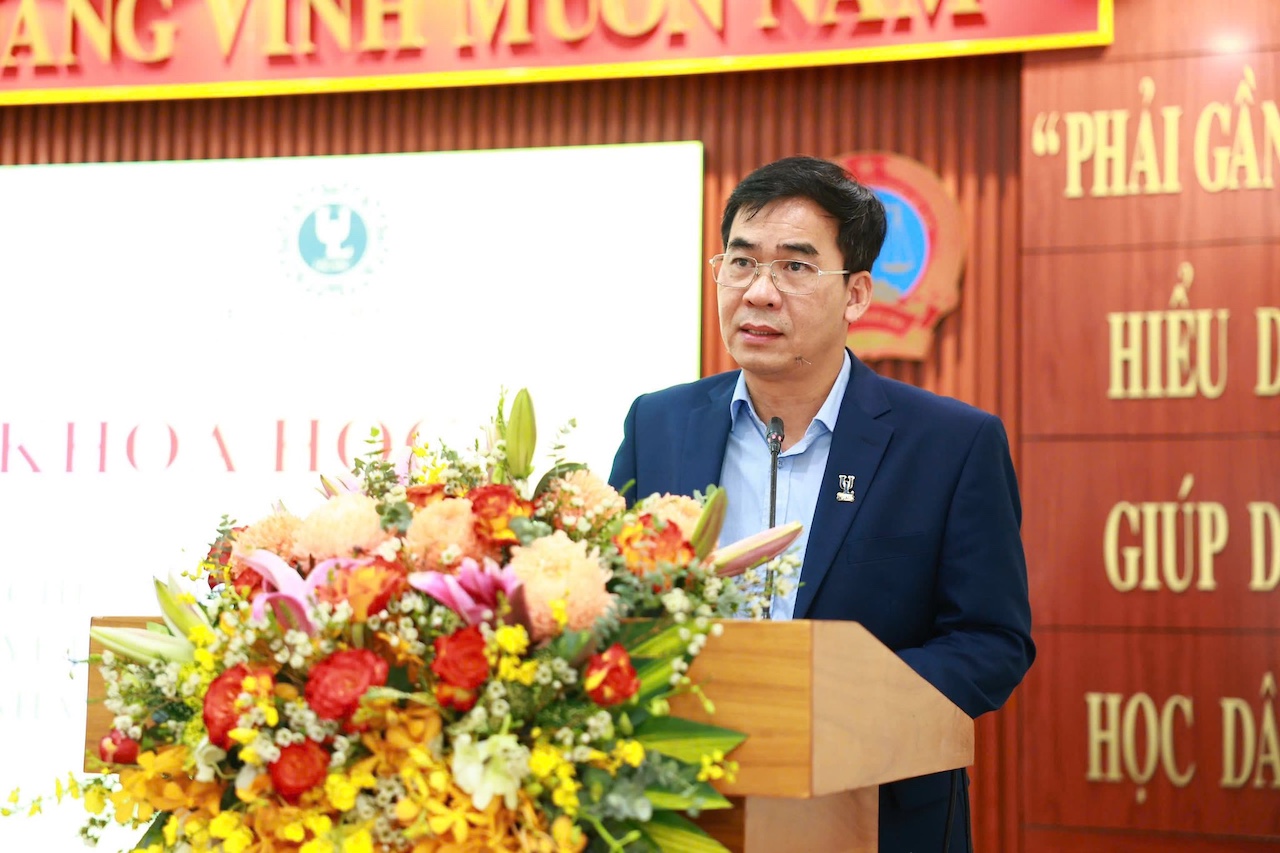
Dr. Lê Trường Sơn, Rector of Ho Chi Minh City University of Law, delivered remarks at the conference
Presentations focused on key issues such as the jurisdiction of regional People’s Courts, the application of artificial intelligence in adjudication, electronic evidence, and the resolution of civil cases in the absence of specific statutory provisions. The outcomes of the conference are expected to be synthesized into policy recommendations submitted to the Supreme People’s Court, contributing directly to the ongoing process of legal system improvement and judicial reform.
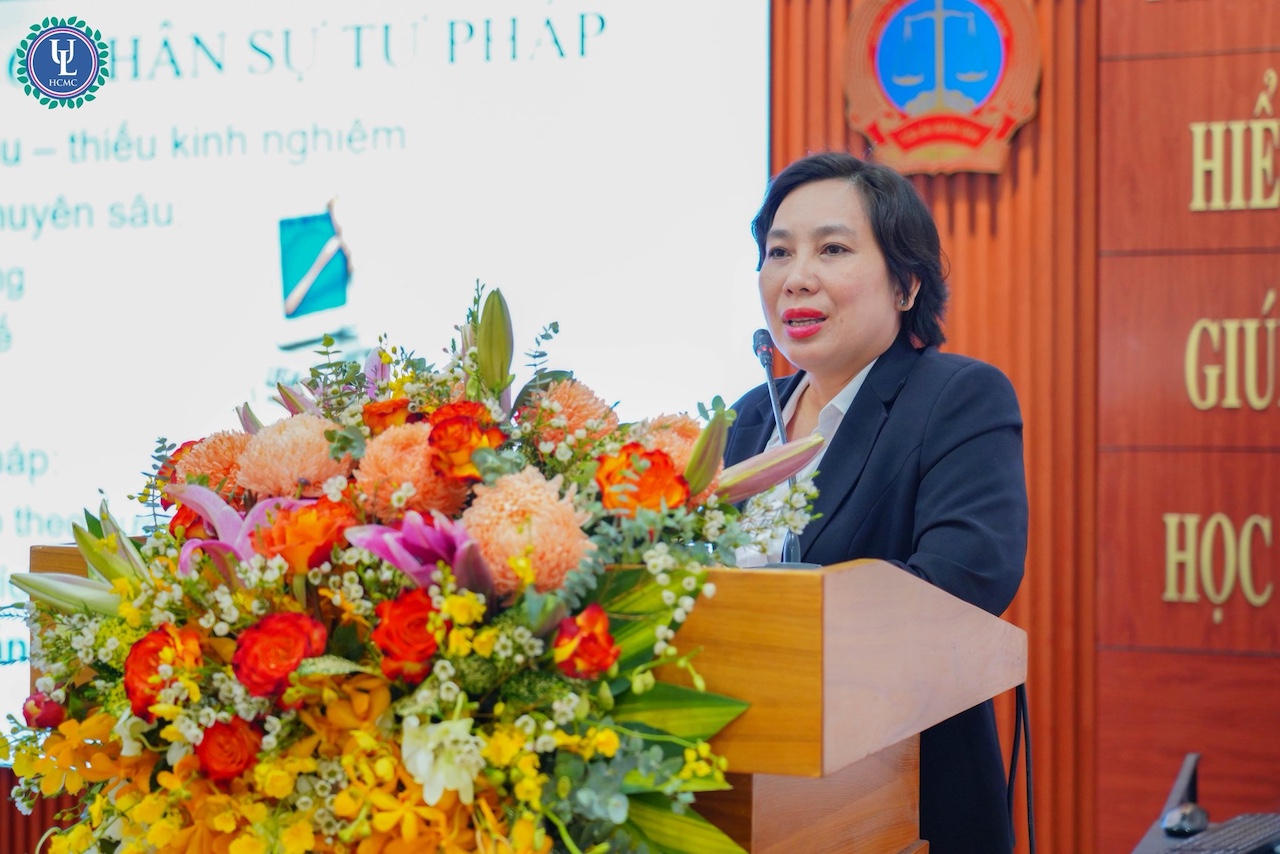
Dr. Nguyễn Mai Trâm, Judge and Deputy Chief of Office of the Ho Chi Minh City People’s Court, presented a paper on “Challenges Facing Regional People’s Courts in Resolving Civil Cases in Response to Judicial Reform Requirements.”
This event further reaffirmed the role of Ho Chi Minh City University of Law not only as a training institution but also as a knowledge hub actively engaged in national public policy and judicial policy formulation.
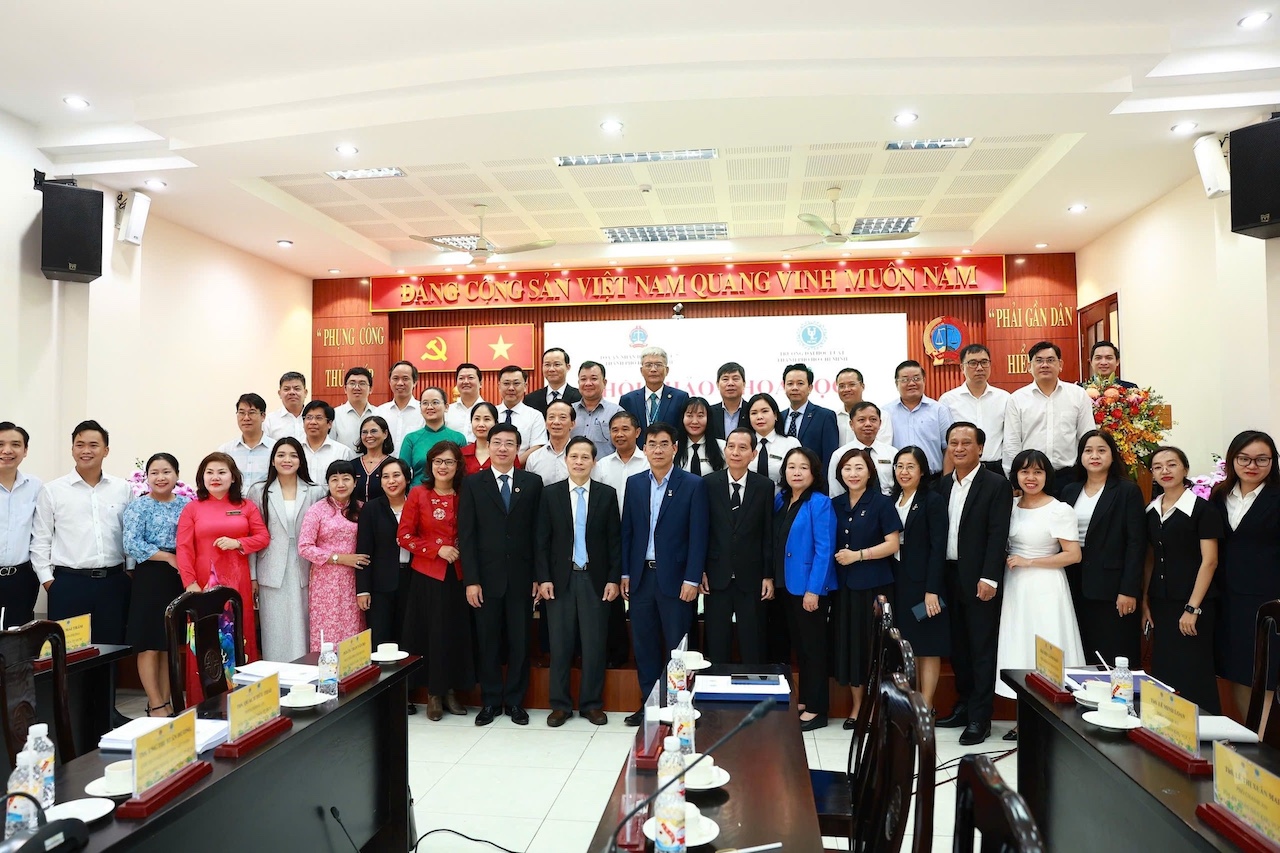
Delegates took a commemorative group photo at the conference
Proud tradition of cultivating legal intellectuals in service of the Fatherland
Throughout its historical development, Ho Chi Minh City University of Law has been intrinsically linked to the cause of national construction and defense, educating generations of legal intellectuals with strong political integrity, profound professional competence, and a spirit of service to the People. This legacy was further affirmed at the 14th National Congress of the Communist Party of Viet Nam, where several distinguished alumni of the University were elected to the 14th-term Central Committee of the Communist Party of Viet Nam, including:
- Hồ Quốc Dũng – Member of the Central Committee of the Communist Party of Viet Nam, Deputy Prime Minister of the Socialist Republic of Việt Nam; Alumnus of Cohort 11.
- Lê Hồng Quang – Member of the Central Committee of the Communist Party of Viet Nam, Deputy Head of the Central Commission for Internal Affairs of the Communist Party of Việt Nam; Alumnus of Cohort 12.
- Lê Tiến Châu – Member of the Central Committee of the Communist Party of Viet Nam, Secretary of the Hải Phòng City Party Committee; Alumnus of Cohort 14.
- Nguyễn Khắc Toàn – Member of the Central Committee of the Communist Party of Viet Nam, Chairman of the People’s Committee of Huế City; Alumnus, Cohort 14.
- Hồ Văn Niên – Member of the Central Committee of the Communist Party of Viet Nam, Secretary of the Quảng Ngãi Provincial Party Committee; Alumnus, Cohort LH 93.
- Bùi Quang Huy – Member of the Central Committee of the Communist Party of Viet Nam, First Secretary of the Central Committee of the Ho Chi Minh Communist Youth Union; Alumnus, Cohort 20.
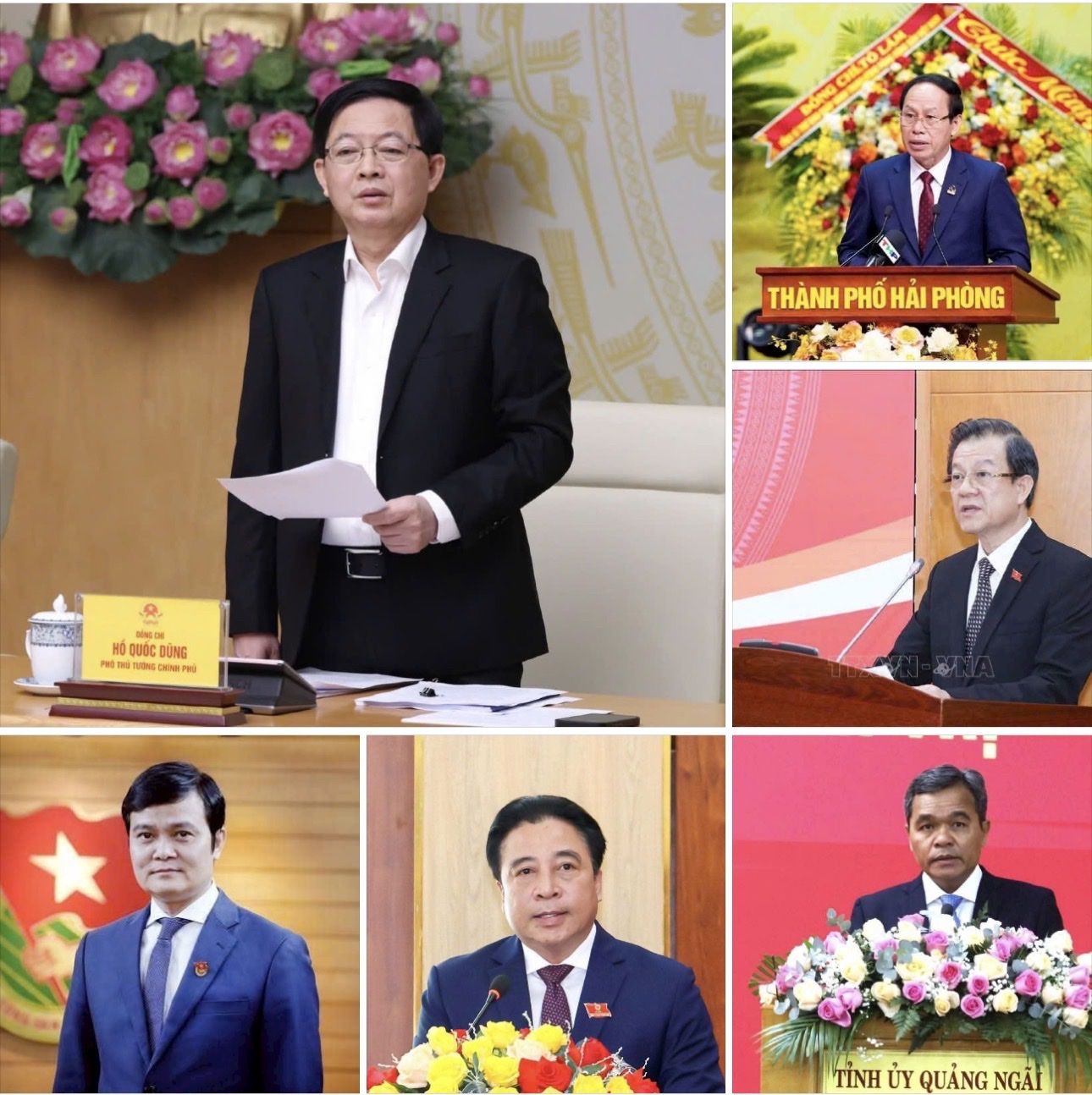
The appointment of alumni to leadership positions within the highest decision-making body of the Party is not only a source of pride for the ULAW academic community, but also a vivid testament to the University’s training quality, academic reputation, and societal role within Viet Nam’s higher education system. It also represents the consistent continuation of the University’s mission to cultivate elite legal human resources contributing to the construction of a socialist rule-of-law state, sustainable national development, and international integration.
Linking knowledge – innovation – policy: a coherent strategic trajectory
Recent academic activities vividly reflect a coherent strategic trajectory at Ho Chi Minh City University of Law: education aligned with development realities, research integrated with policy formulation, and knowledge dedicated to the mission of national service. From shaping interdisciplinary training models to expanding cooperation for innovation, engaging directly in judicial reform discourse, and witnessing alumni serving in the Party and State leadership, the University’s role as a central knowledge actor within the national academic–policy space becomes increasingly evident.
As the University approaches the milestone of 50 years of formation and development and 30 years under the name Ho Chi Minh City University of Law, these activities are not merely episodic events but manifestations of a continuous historical process in which the University has steadily asserted itself as a key law training institution, an influential legal research center, and a knowledge generator serving the construction of a socialist rule-of-law state in Viet Nam.
Building upon its academic tradition, social responsibility, and international integration, Ho Chi Minh City University of Law continues to shape its role as an academic–policy institution, contributing to sustainable national development in the era of deep integration and comprehensive digital transformation.
Implemented by: Department of Communications and Enterprise Relation
-----
TRƯỜNG ĐẠI HỌC LUẬT THÀNH PHỐ HỒ CHÍ MINH (ULAW)
Hotline: (028) 39400.989 – 1900.5555.14 – Zalo: 0879.555.514
Website: https://hcmulaw.edu.vn/
Chuyên trang 50 năm: https://50years.hcmulaw.edu.vn/
Fanpage: https://www.facebook.com/hcmulaw/
Youtbe: https://www.youtube.com/@ulawhcm
TikTok: https://www.tiktok.com/@ulawtv
#50NamTruyenThong #30NamMangTenTruong #VungBuocVuonTam #ULAW50 #KỷNiệm50Năm #TrườngĐạiHọcLuậtTPHCM #ULAW #VữngTruyềnThốngSángTươngLai #ULAW #ĐạiHọcLuậtThànhphốHồChíMinh