On 12 October 2026, Ho Chi Minh City University of Law (ULAW) convened a conference to review the implementation of Resolution No. 41/NQ-HĐT, issued by the University Council on 29 April 2022, concerning the University’s Development Strategy to 2030, with a Vision to 2045. The conference assessed the outcomes achieved during 2022–2025 and deliberated on strategic priorities for 2026–2030, with particular emphasis on enhancing the quality of education and training, strengthening research capacity and improving governance effectiveness, while preserving the University’s established strengths and distinctive identity in the field of law throughout its development.
The conference was attended by representatives of the University Party Committee, the Board of Rectors, heads of constituent units, and members of the University’s academic and administrative staff.
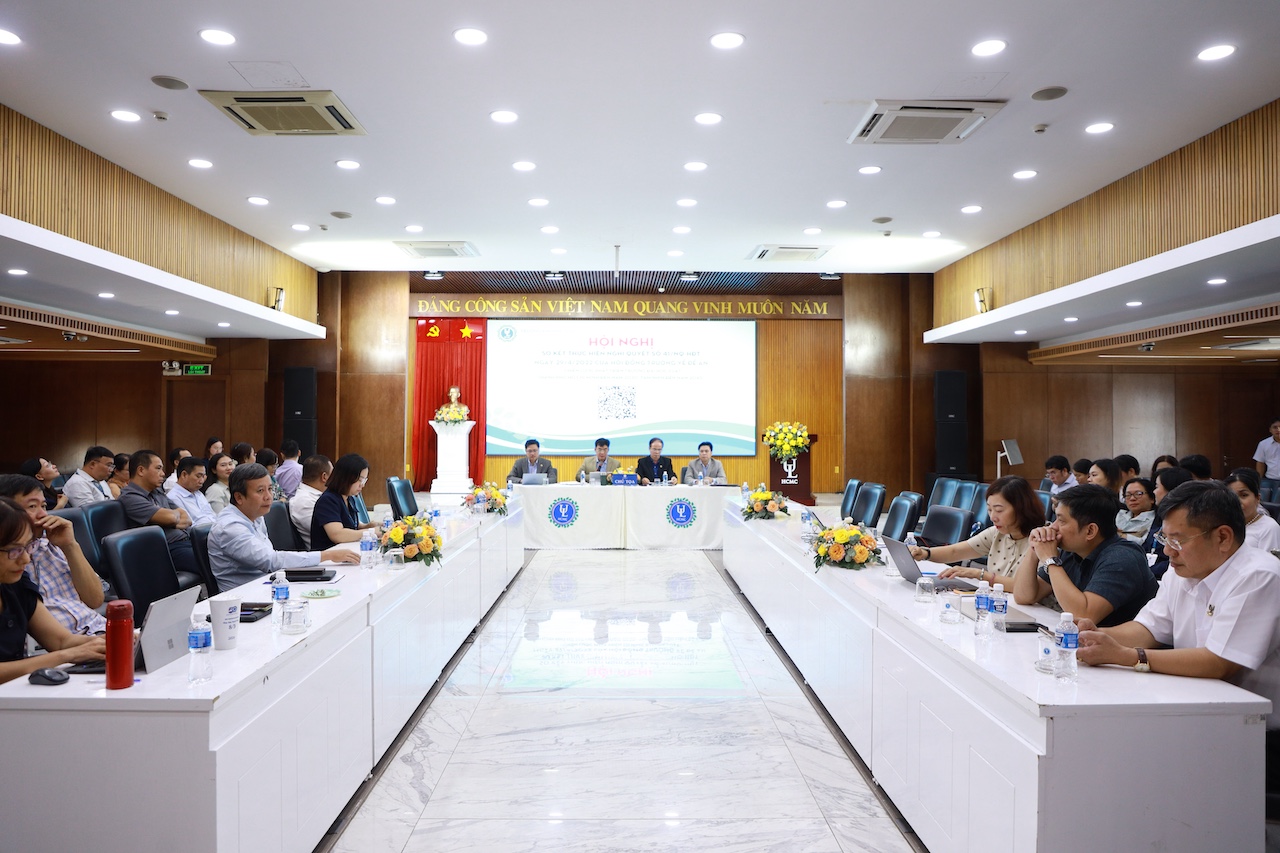
An overview of the conference
The progress review report documented positive developments in education and training, scientific research, human resource development, international cooperation and university governance. By the end of 2025, total enrolment had reached 14,340 learners, representing a 19.18% increase over the previous year. Postgraduate enrolment comprised 1,274 master’s students and 139 doctoral candidates. The University continued to reform its academic programmes, diversify learning opportunities and improve the quality of services provided to learners.
During 2022–2025, the University organised 147 legal education and professional development courses and concluded 35 international cooperation agreements and 21 domestic cooperation agreements. Organisational restructuring, the modernisation of physical infrastructure, digital library development and the commencement of operations at the Quảng Trị Campus contributed to strengthening the University’s capacity in education, research and community service.
In his opening remarks, Associate Professor Dr. Vũ Văn Nhiêm, Deputy Secretary of the University Party Committee and Vice Rector, underscored the significance of the review amid ongoing transformations in higher education governance. He emphasised that the development strategy should be subject to regular evaluation, with its established foundations preserved and its provisions refined and supplemented in response to practical circumstances. The Vice Rector called upon delegates to concentrate their discussions on fundamental priorities, ensuring that the University’s development orientation remained firmly grounded in its strengths in law and supported by the conditions necessary for quality assurance.
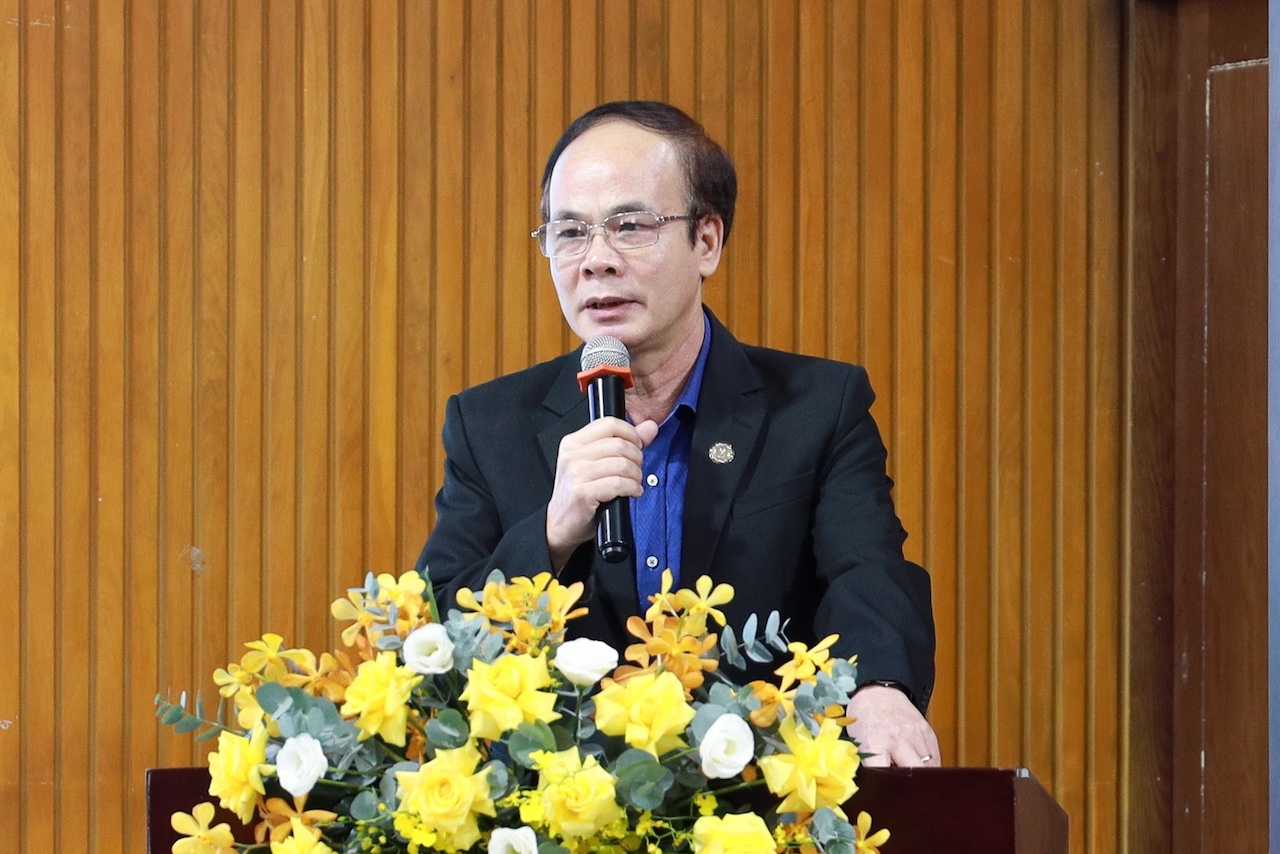
Associate Professor Dr. Vũ Văn Nhiêm, Deputy Secretary of the University Party Committee and Vice Rector, delivering the opening remarks at the conference
The conference featured six thematic presentations addressing education and training, human resource development, scientific research, digital transformation, resource provision and the University’s strategic development orientation.
Associate Professor Dr. Trịnh Quốc Trung, Head of the Office of Graduate Training, highlighted the need to develop educational provision in alignment with societal demands, reform academic programmes in accordance with quality standards and strengthen internationalisation. His proposals emphasised the importance of ensuring coherence between educational development and the availability of qualified academic staff, adequate physical infrastructure and institutional capacity to support learners.
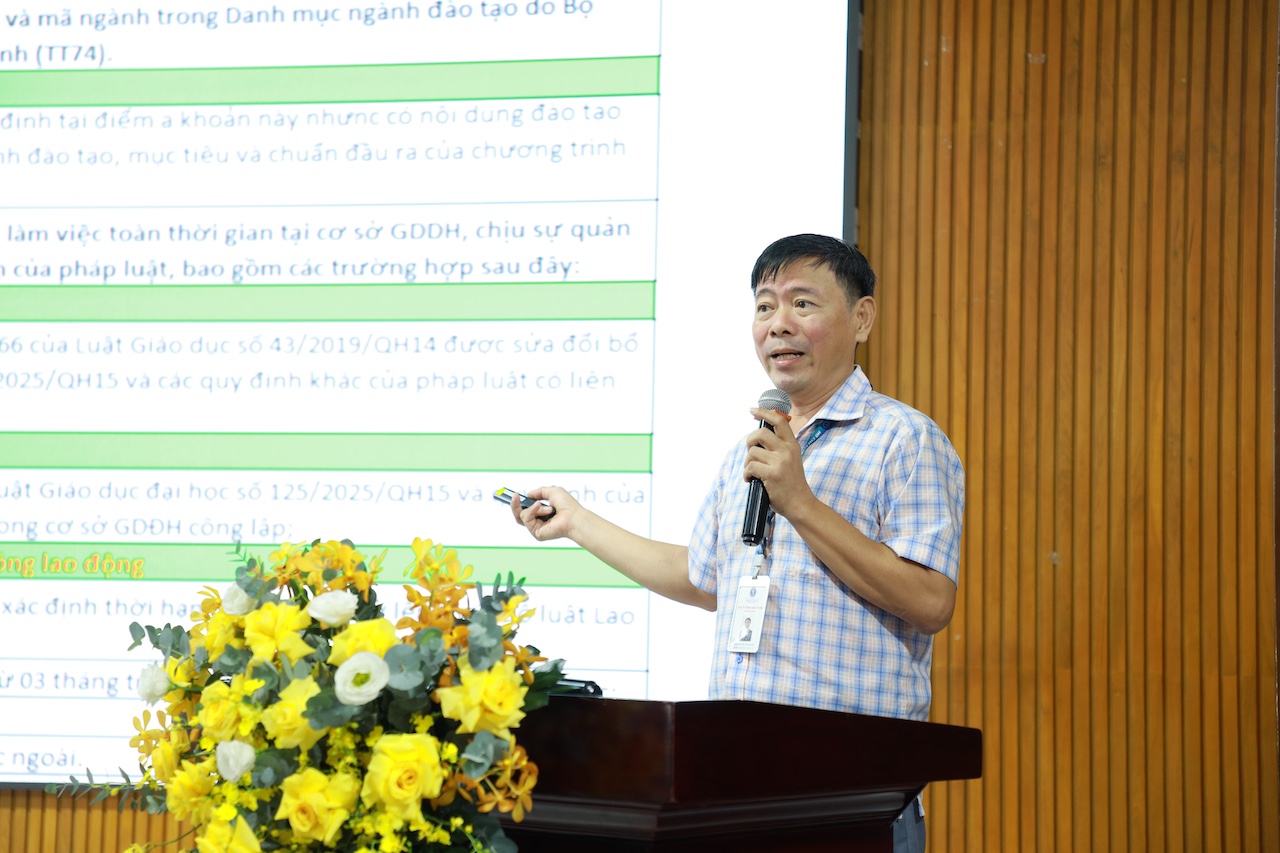
Associate Professor Dr. Trịnh Quốc Trung, Head of the Office of Graduate Training, presenting his paper at the conference
From a human resource development perspective, Dr. Phan Anh Tuấn, Head of the Office of Organization and Human Resources, identified academic staff and researchers as the fundamental foundation of the University’s development. His presentation proposed enhancing recruitment effectiveness, attracting and developing highly qualified personnel, and strengthening the research capabilities, foreign-language proficiency and capacity for international integration of the University’s workforce.
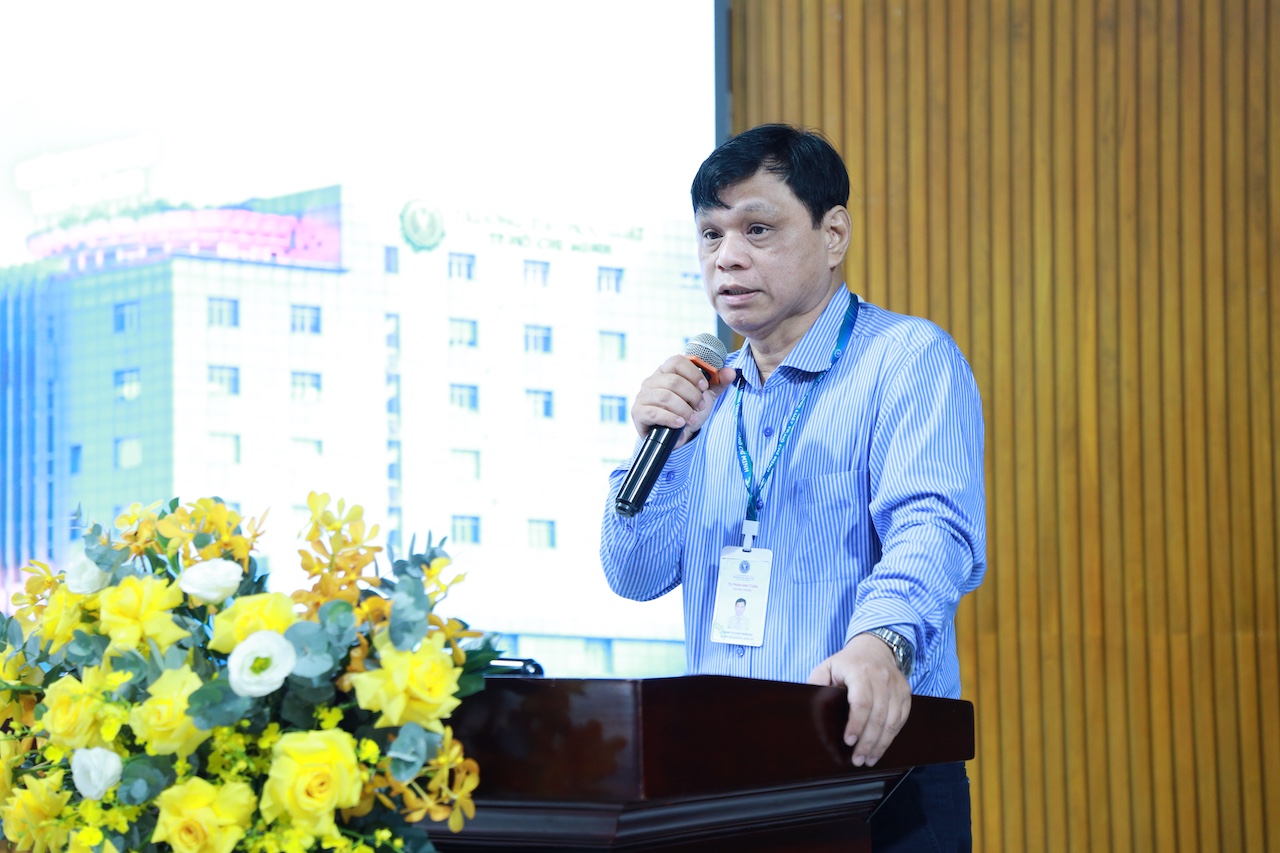
Dr. Phan Anh Tuấn, Head of the Office of Organization and Human Resources, delivering his presentation at the conference
Dr. Lê Thị Thúy Hương, Head of the Department of Science, Technology and Development Cooperation, emphasised the imperative of translating research findings into sound analytical foundations and practical solutions for the formulation and refinement of policies and legislation. Ongoing cooperation between ULAW and the Ho Chi Minh City People’s Committee continues to create opportunities for research, policy consultation and critical policy review, thereby enabling the University’s experts to make meaningful contributions to the City’s development.
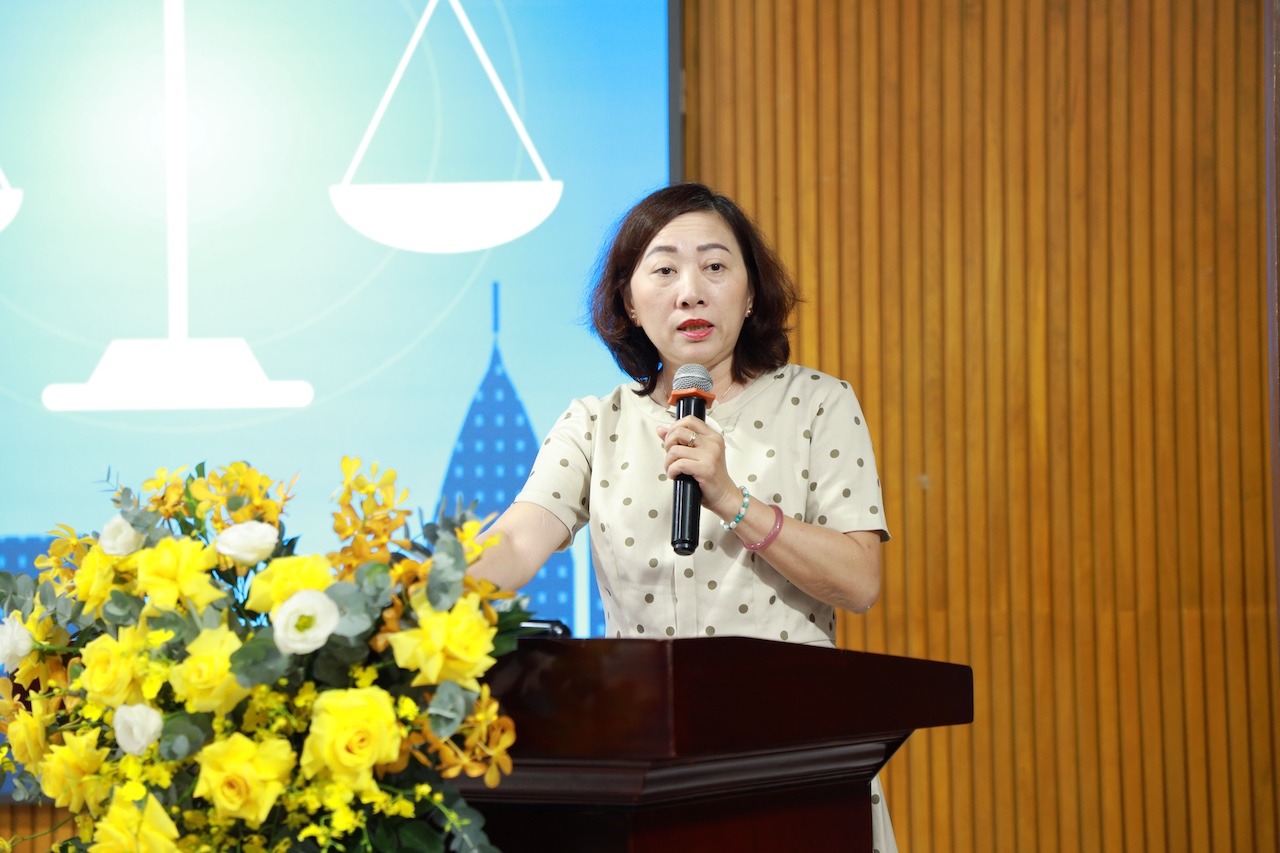
Dr. Lê Thị Thúy Hương, Head of the Department of Science, Technology and Development Cooperation, delivering her presentation at the conference
Addressing digital transformation, Mr. Đào Quốc Hùng, Head of the Office of Digital Transformation, outlined an orientation towards reforming governance practices through data-driven approaches, improving the quality of learner support services and applying technology to enhance teaching and research. The responsible application of artificial intelligence was also identified as an important consideration throughout the implementation process.
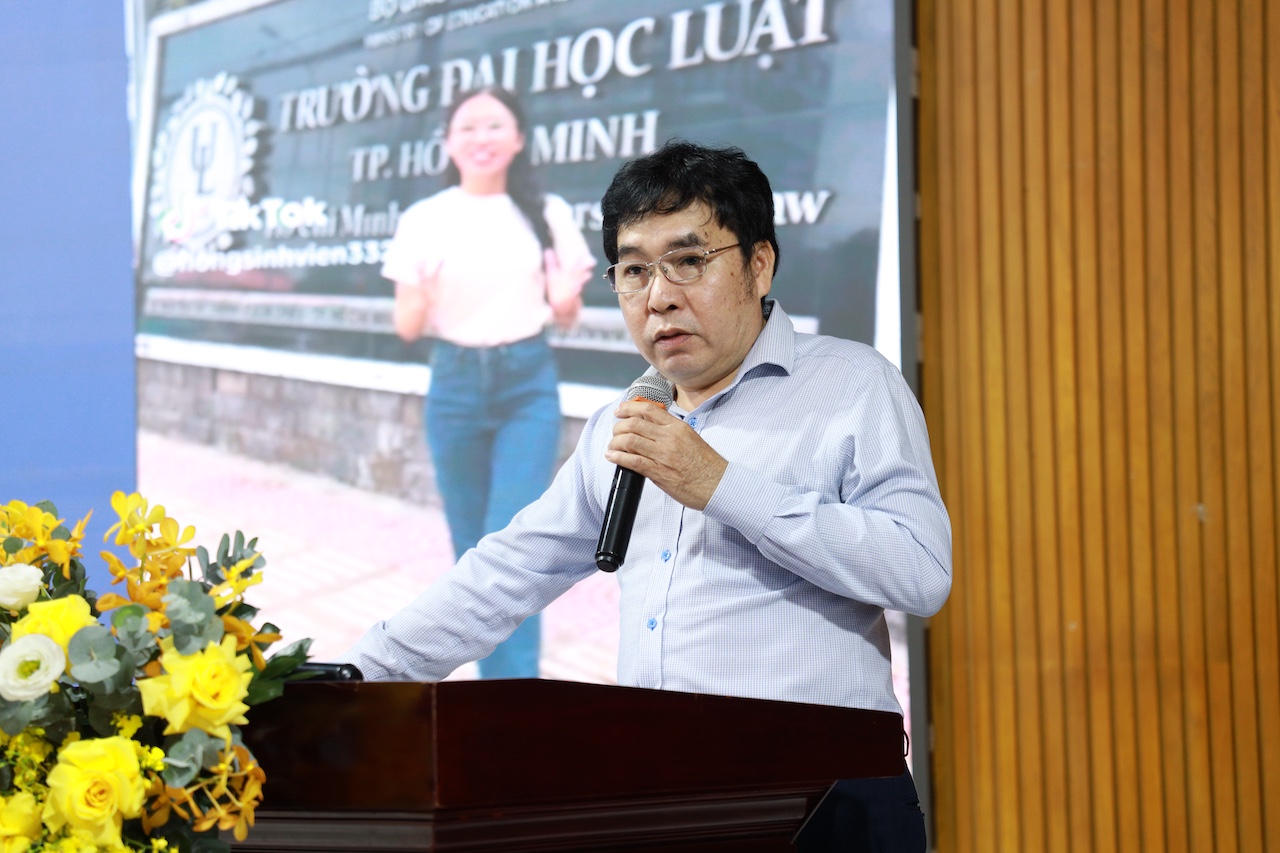
Mr. Đào Quốc Hùng, Head of the Office of Digital Transformation, delivering his presentation at the conference
Regarding resource provision, Mr. Phạm Hoàng Minh, Head of the Office of Facilities Management, examined the need to align financial planning with institutional development priorities. The proposed measures focused on optimising the utilisation of existing infrastructure, mobilising resources through lawful means and progressively modernising teaching and research facilities, in accordance with the University’s implementation capacity and the requirements of sustainable development.
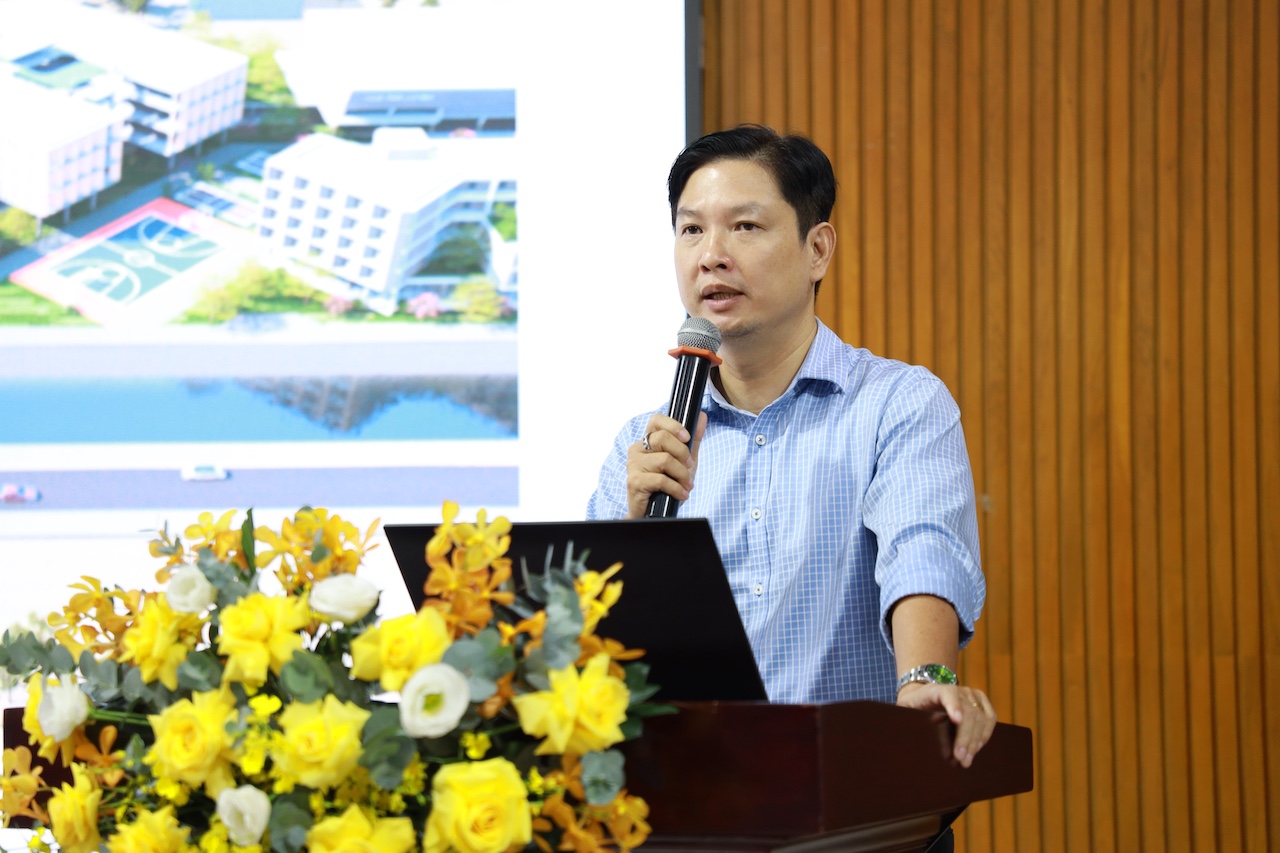
Mr. Phạm Hoàng Minh, Head of the Office of Facilities Management, delivering his presentation at the conference
Presenting the University’s development orientation, Dr. Lê Trường Sơn, Secretary of the University Party Committee and Rector, emphasised the objective of developing ULAW into a research-oriented university spanning multiple disciplines and fields, built upon its established strengths in law. Achieving this objective requires systematic preparation through improvements in staff quality, research capacity, quality assurance conditions and governance effectiveness.
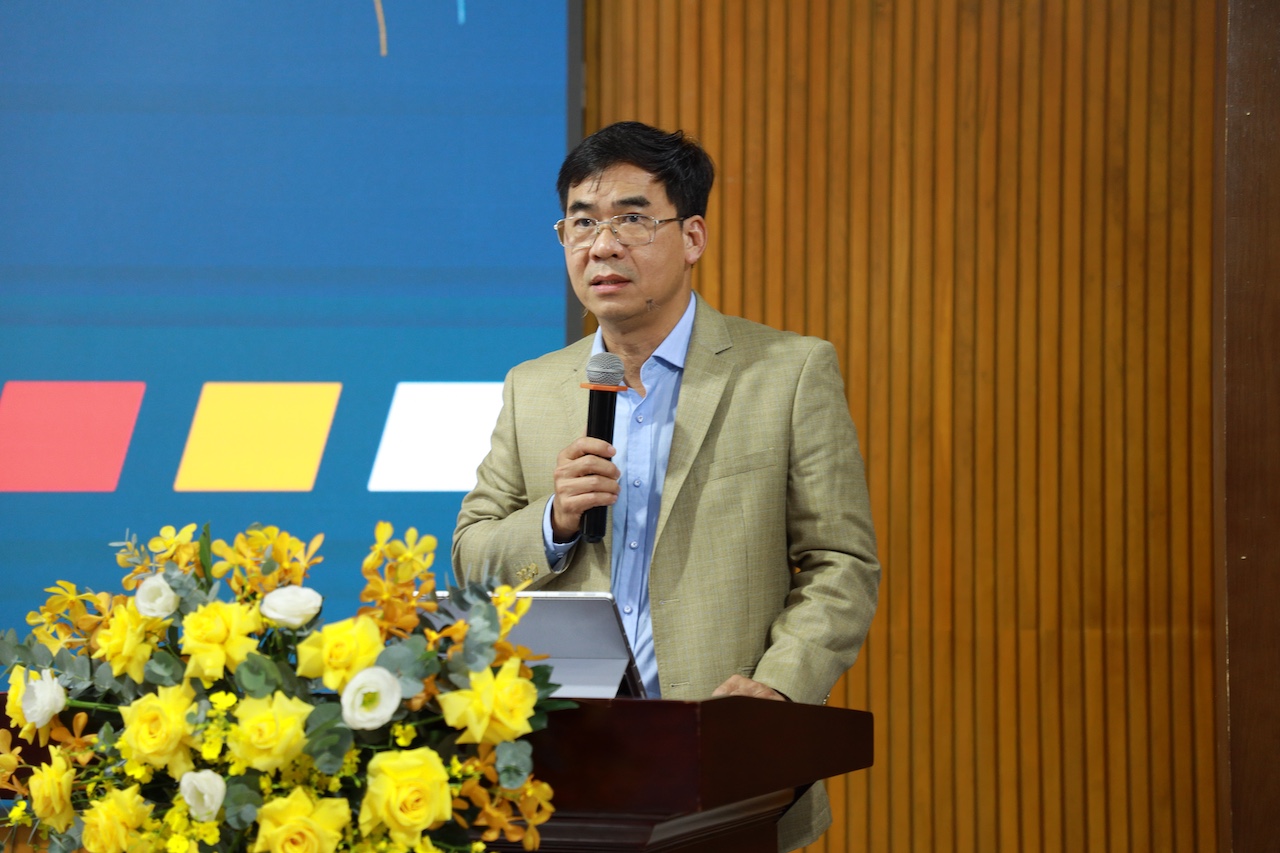
Dr. Lê Trường Sơn, Secretary of the University Party Committee and Rector, delivering an address outlining strategic directions at the conference
The Rector underscored the principles of preserving institutional identity, safeguarding quality and developing substantive institutional capabilities throughout the development process. Each stage of development must be aligned with societal needs, applicable legal requirements and the University’s capacity to respond effectively. The implementation of the development strategy must be evaluated against tangible outcomes in education and training, research and community service.
During the discussion session, delegates contributed recommendations on enhancing the quality of academic programmes, reforming admissions practices, developing academic staff, advancing scientific research and expanding cooperation. Their proposals also addressed the need to strengthen practical learning experiences, improve the quality of learner support and maximise the effectiveness of existing resources.
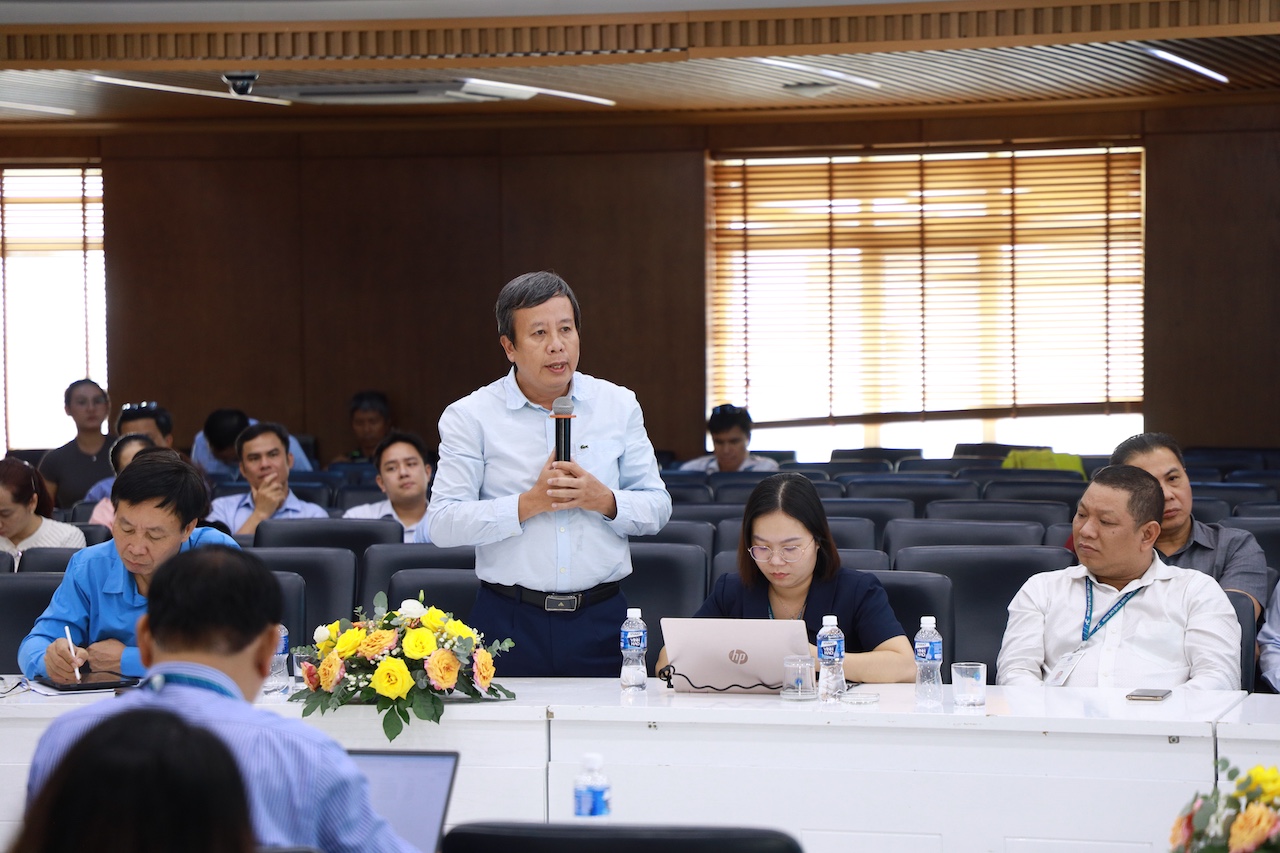
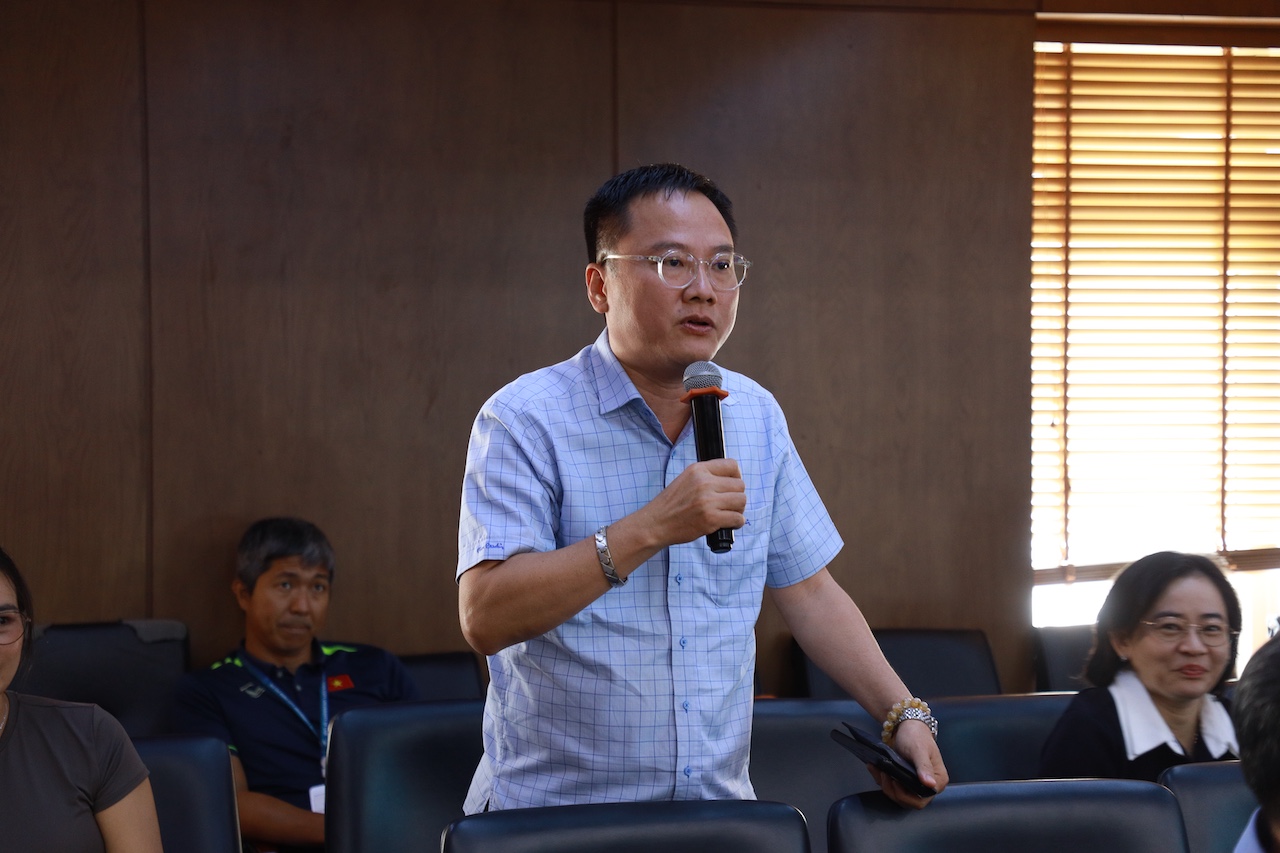
Delegates presenting their perspectives and contributing recommendations during the conference
In his concluding remarks, Dr. Lê Trường Sơn acknowledged the achievements attained in implementing Resolution No. 41/NQ-HĐT, as well as the delegates’ sense of responsibility and substantive professional contributions. The Rector called for a comprehensive review of the strategic objectives and performance targets, retaining provisions that remained appropriate, revising those no longer responsive to practical requirements and incorporating new tasks. Quality and substantive institutional capability would continue to serve as the overarching criteria guiding the determination of subsequent development priorities.
Regarding implementation arrangements, the Rector directed that the progress review report be finalised by incorporating the contributions made at the conference; that the development strategy be updated and revised; that the implementation plan be reviewed following consideration and approval of the proposed strategic orientations; and that the system of performance indicators be refined in accordance with the functions and responsibilities of each constituent unit. All tasks must be accompanied by clearly assigned responsibilities, allocated resources, implementation schedules and specified deliverables, in adherence to the principle of the “six clear requirements”: clearly defined tasks, clearly designated persons in charge, clearly delineated responsibilities, clearly established authority, clearly specified timeframes and clearly identified deliverables.
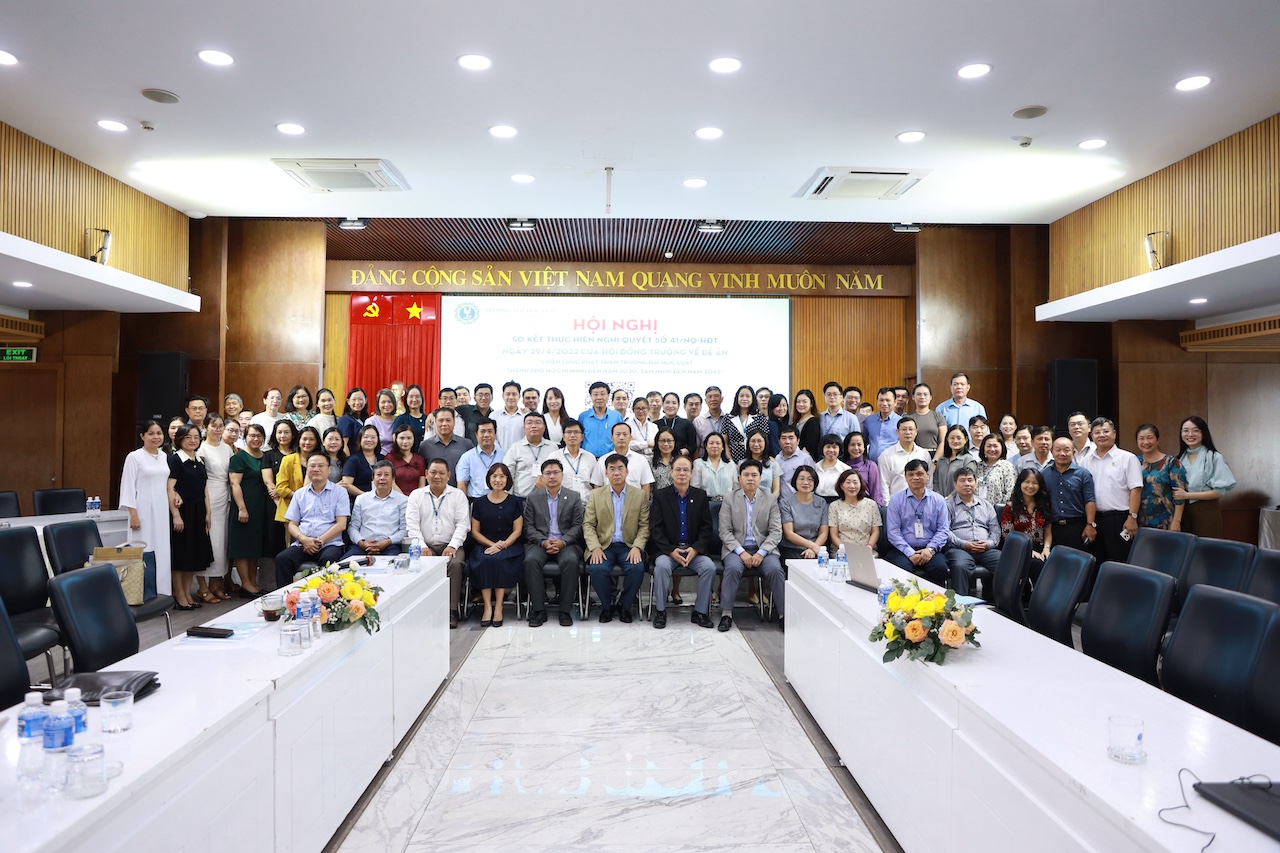
Delegates posing for a commemorative group photograph at the conference
The conference provided Ho Chi Minh City University of Law with an opportunity to review its progress and establish a shared understanding of the priorities for the next phase of development. Guided by a commitment to continuity and innovation, the University will continue to enhance the quality of education and training, strengthen research capacity and improve governance effectiveness, while capitalising on its established strengths in law throughout its development and international integration.
Prepared by: Department of Communications and Enterprise Relations